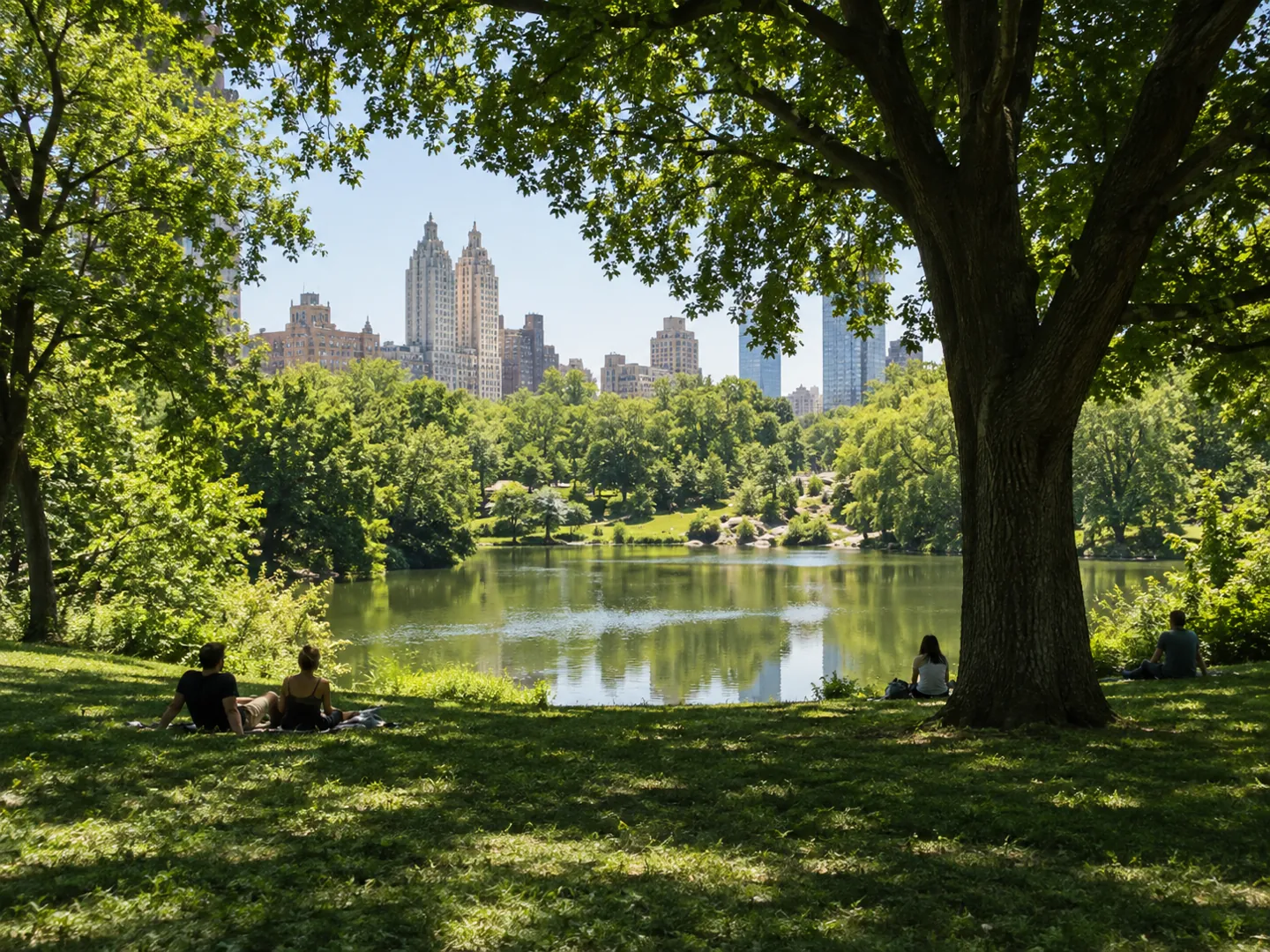
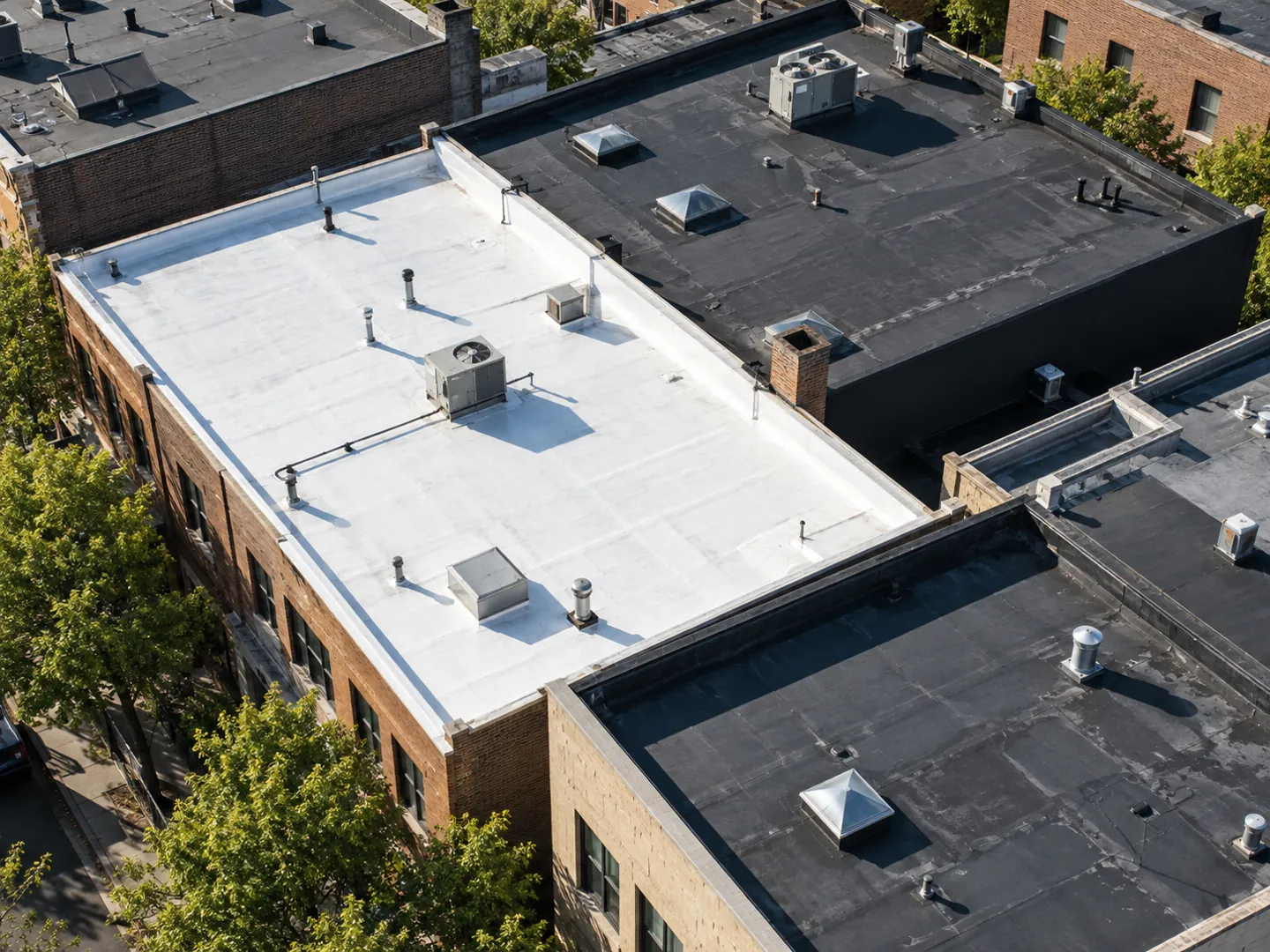
Brick, tarmac and roofs soak up the sun all day and give the heat back after dark. Scientists call the result an urban heat island, and trees, water and lighter roofs are what push it back.
AI-generated image, not a photograph of a real person or place.
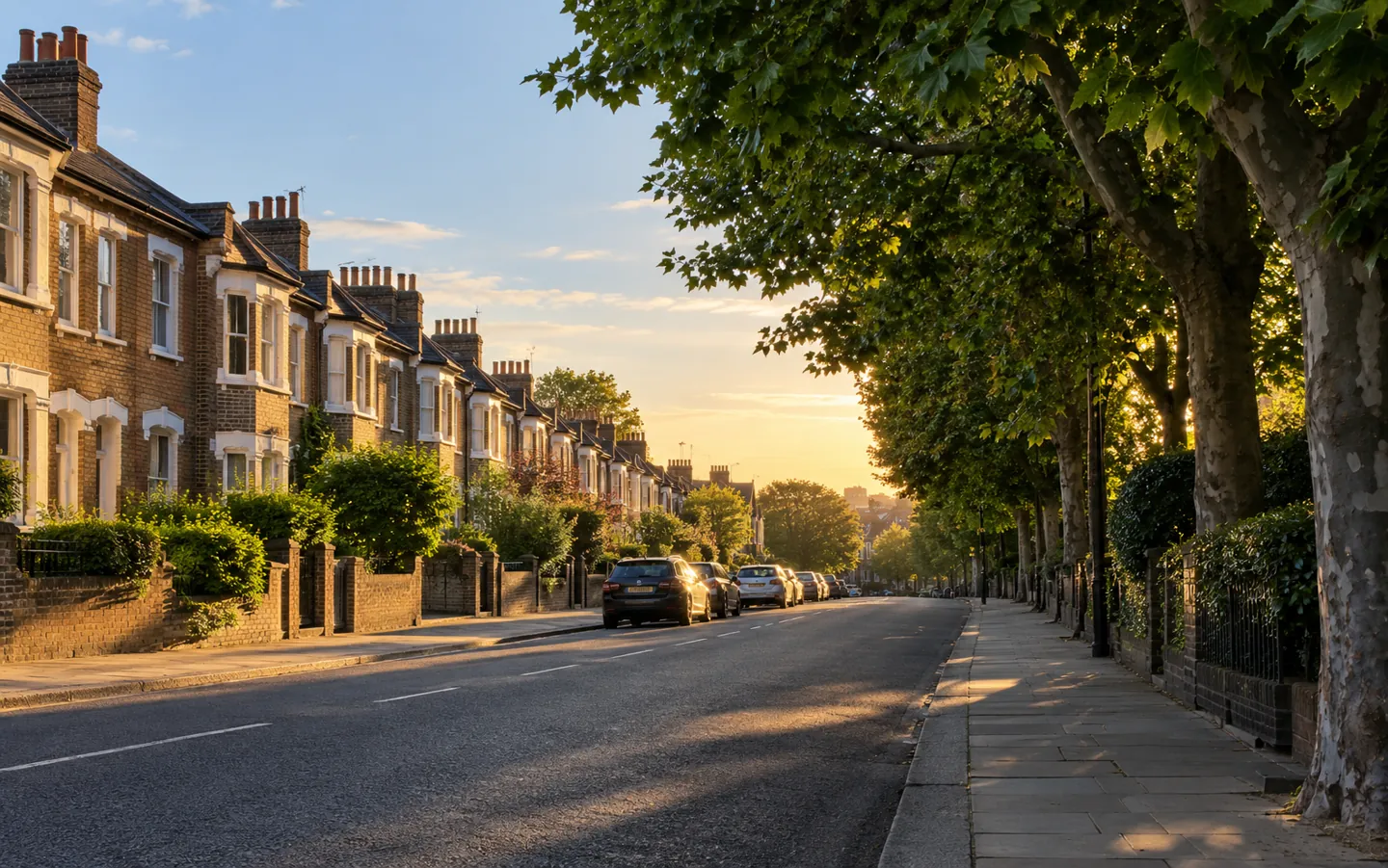
Hard surfaces store heat
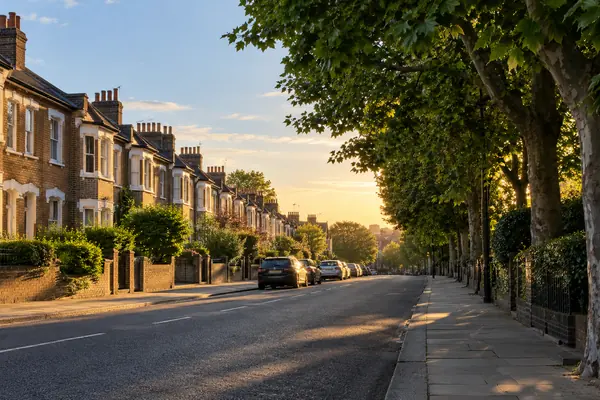
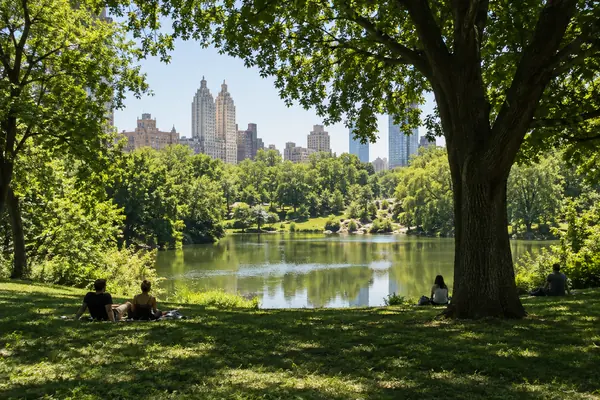
Trees shade and sweat
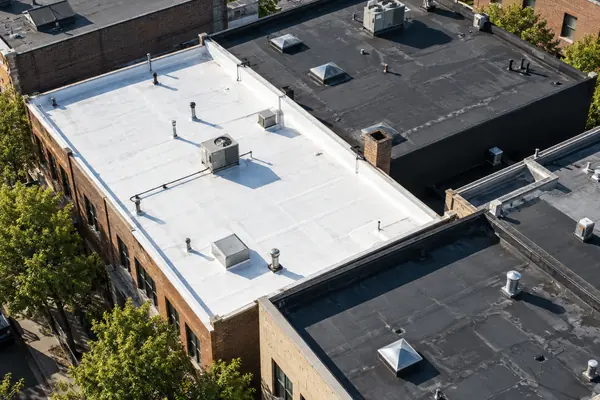
Light roofs reflect
Why one street feels cooler than the next
THE SHORT ANSWER
Built surfaces hold the heat in.
Three things do most of the work. Each one also points to a way to cool a street.
AFTER DARK
Warmest at night
Buildings and roads release the day's heat slowly, so heat islands often grow after sunset. In a University of Reading model of London, the urban effect was largest at night.
Pick a surface you might pass on a sunny afternoon to see how it behaves. The bar shows how much heat it tends to add to a city.
Based on US EPA heat island guidance. Figures come from US research reviews; UK streets follow the same physics.
TWO NUMBERS WORTH KNOWING
A few degrees, felt most at night.
One figure from a model of London, one from a study of 93 European cities.
up to 5°C
Urban warming in a London weather model
Met Office model runs with London's surfaces, compared with the same area as grass, found an urban increment of up to 5 K (5°C). It was largest at night, when the air near the ground is shallow.
LONDON · UNIVERSITY OF READING
≈ 1.5°C
Average warming from the urban heat island
Across 93 European cities in summer 2015, the population-weighted average extra warmth from urban heat islands was 1.5°C, ranging from 0.5 to 3.0°C between cities.
93 CITIES · THE LANCET 2023
The same Lancet study estimated that raising tree cover to 30% would cool cities by an average of 0.4°C and could have prevented about 2,644 of the 6,700 premature summer deaths it linked to urban heat islands.
FOUR THINGS TO NOTICE
Read your street like a thermometer.
You can see a heat island at work on any sunny day once you know what to look for. These are the features the research keeps coming back to.
Follow the shade
Tree-lined streets, parks and ponds form cooler pockets inside a city, while dense, paved centres run warmest.
Look at the roofs
Pale, reflective roofing absorbs less sun than dark materials. The EPA lists cool options for both flat and pitched roofs.
Count the trees
Trees cool by shade and evaporation, and the EPA says urban trees can also absorb 15 to 27% of annual rainfall.
Watch the weather
Calm, clear days make heat islands stronger. Wind and cloud weaken them by carrying heat away and blocking the sun.
AI-generated image, not a photograph of a real person or place.AI-generated image, not a photograph of a real person or place.
WHY NIGHTS MATTER
The heat comes back after sunset.
In the University of Reading's model of London, the lowest layer of air over the city kept warming after sunset as heat stored in the buildings and streets was released. The urban effect was largest at night, when that layer is shallow.
The US EPA reports the same pattern from a review of US studies: urban areas were about 1 to 7°F warmer than outlying areas by day and about 2 to 5°F warmer at night. Narrow streets between tall buildings also block the breezes that would carry heat away.
Questions
Questions people ask
What is an urban heat island?
It is a built-up area that is warmer than the countryside around it. Buildings, roads and other structures absorb and re-emit more of the sun's heat than forests or water, and cities have less greenery to cool the air.
Why are cities warmer at night?
Bricks, concrete and tarmac store heat during the day and release it slowly after sunset. In a University of Reading model of London, the urban warming effect was largest at night.
How much cooler is it under trees?
A review of 308 studies, cited by the US EPA, found urban forests were on average 1.6°C (3.0°F) cooler than urban areas without greenery. Trees cool by shading and by evaporating water from their leaves.
What is a cool roof?
A roof with high solar reflectance, so it absorbs less of the sun, and good thermal emittance, so it sheds the heat it does absorb. The EPA says cool roofs can lower the hottest indoor temperatures in homes without air conditioning by 1.2 to 3.3°C.
Does the heat island affect the UK?
Yes. The Met Office notes that buildings, waste heat, narrow streets and fewer trees all add warmth in UK cities, and suggests planting trees in open spaces and streets to reduce heat risk.